

After the storm, young Central Desert curators open Little Desert Mob Stories
Two days after a damaging storm left thousands of Alice Springs homes without power, local year 11 and 12 students opened a bright, student-curated exhibition of small canvases made by Indigenous Australian young people from across the Central Desert region.
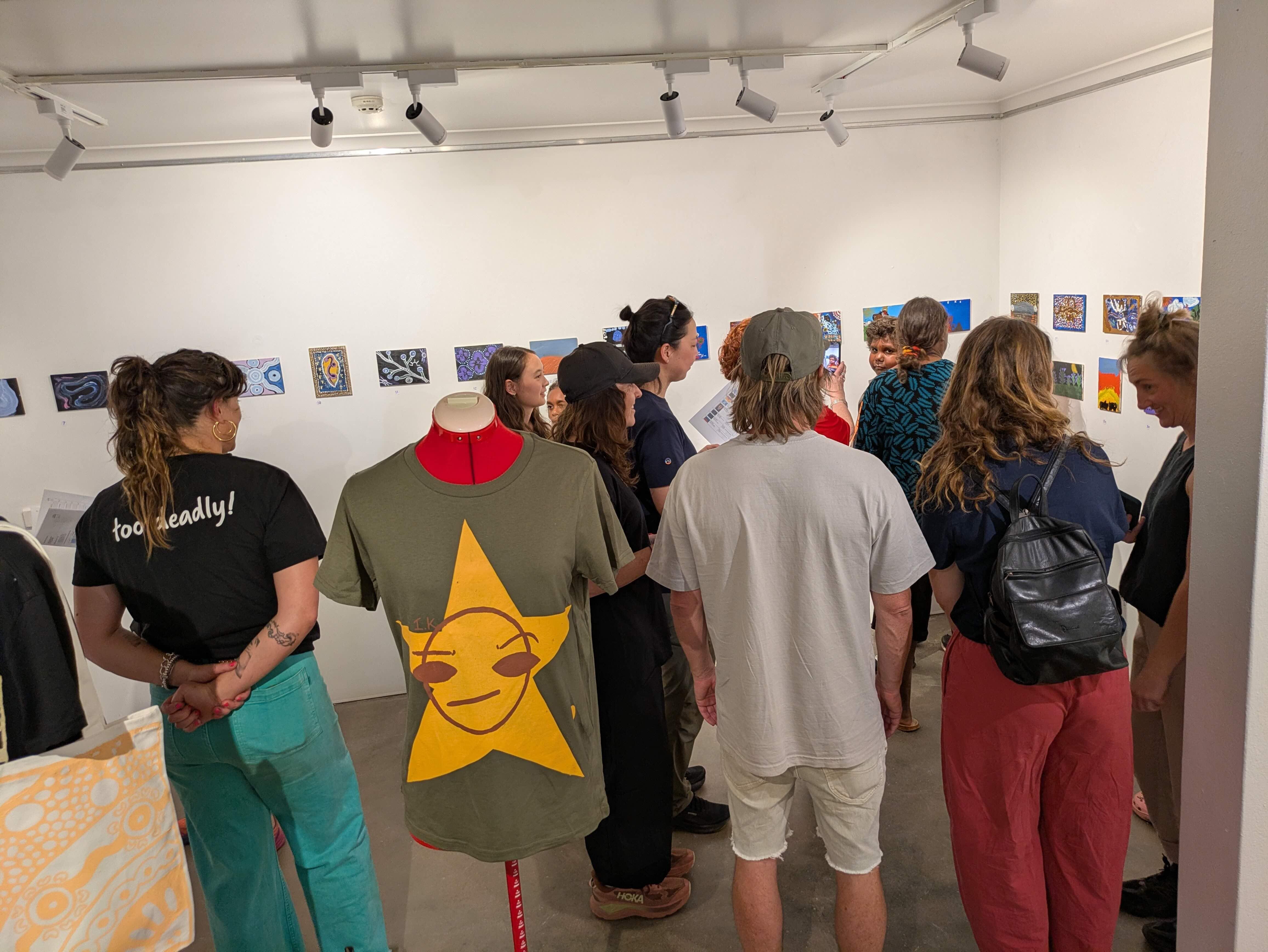
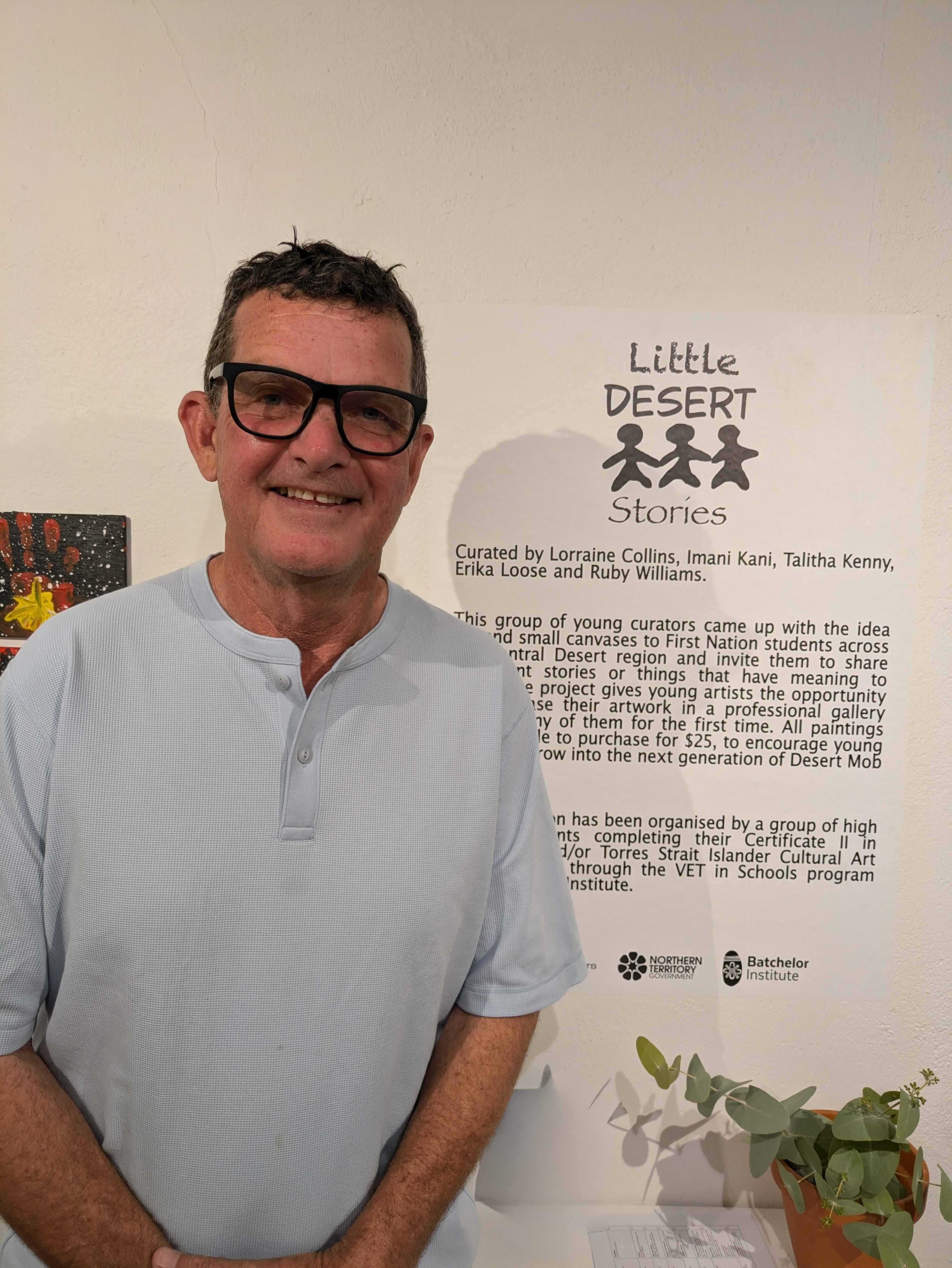
Little Desert Mob Stories opened on Wednesday, 14 October at the June Marriott Gallery, Central Craft, on Arrernte Country in Mparntwe. The exhibition is a satellite event to Desart’s Desert Mob and runs until Sunday, 17 October.
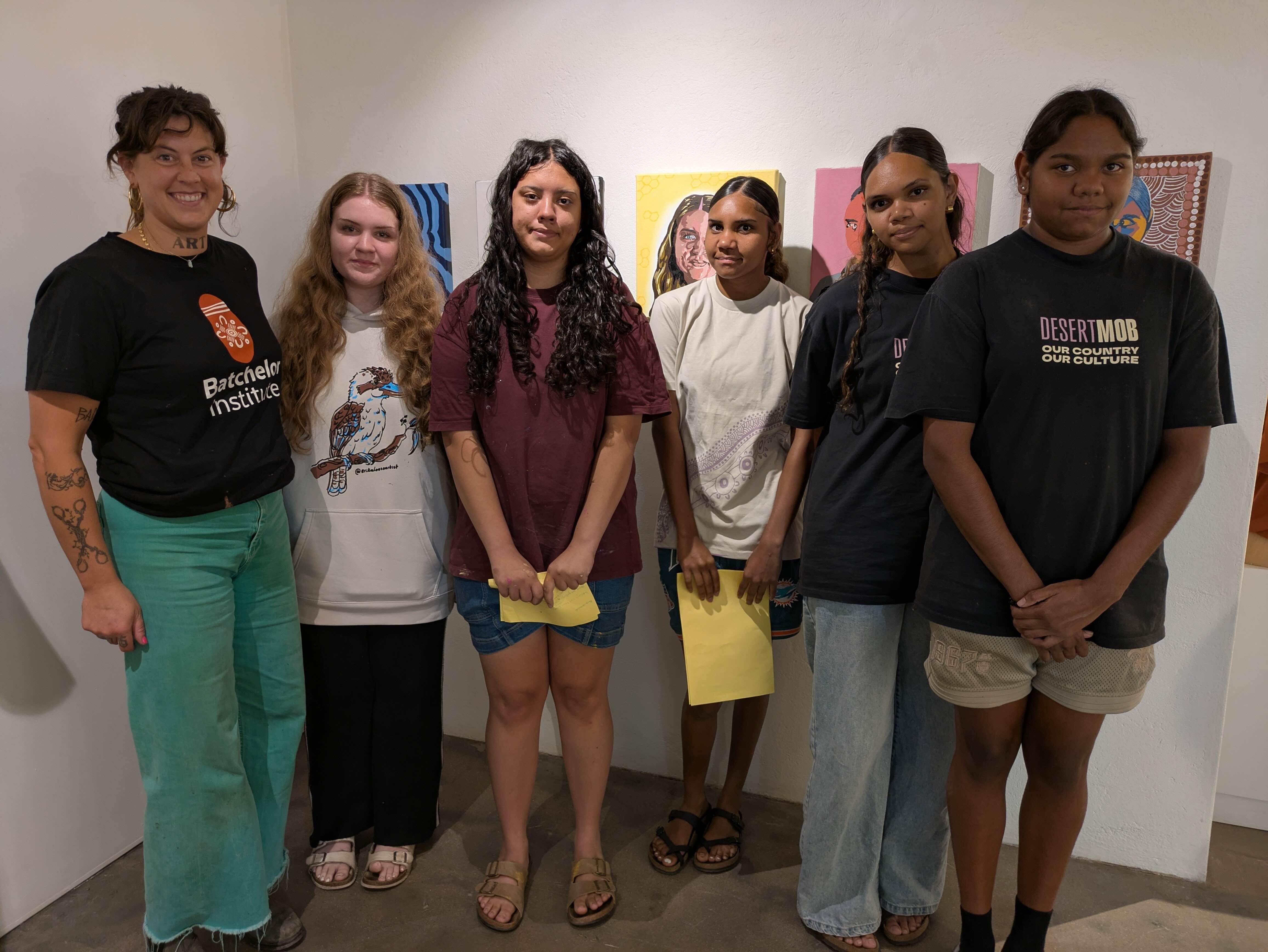
The young curators, Lorraine Collins, Imani Kani, Talitha Kenny, Erika Loose and Ruby Williams, are high school students from St Philip’s College, Our Lady of the Sacred Heart and Centralian Senior College. They are completing CUA20320 Certificate II in Aboriginal and/or Torres Strait Islander Cultural Arts Industry Work through Batchelor Institute’s VET in Schools program.
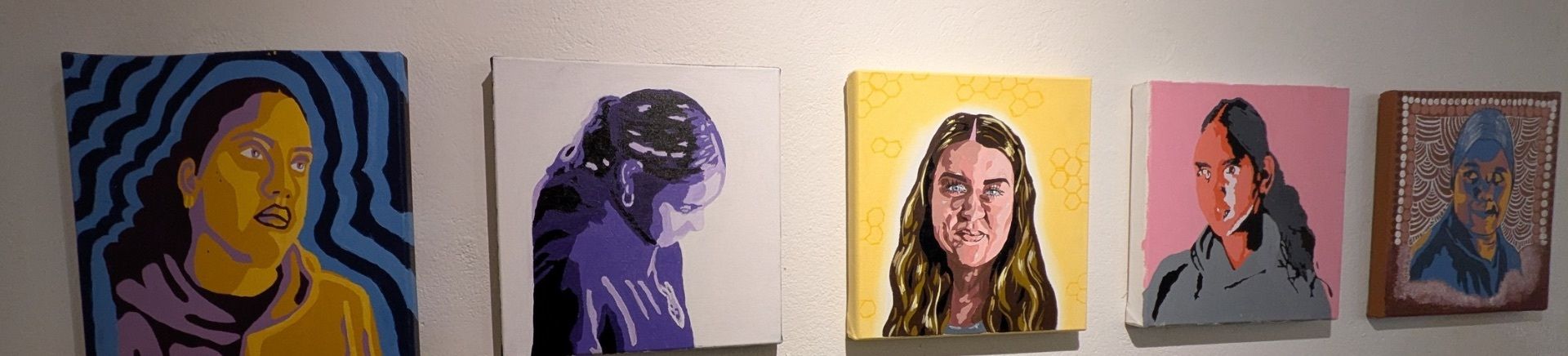
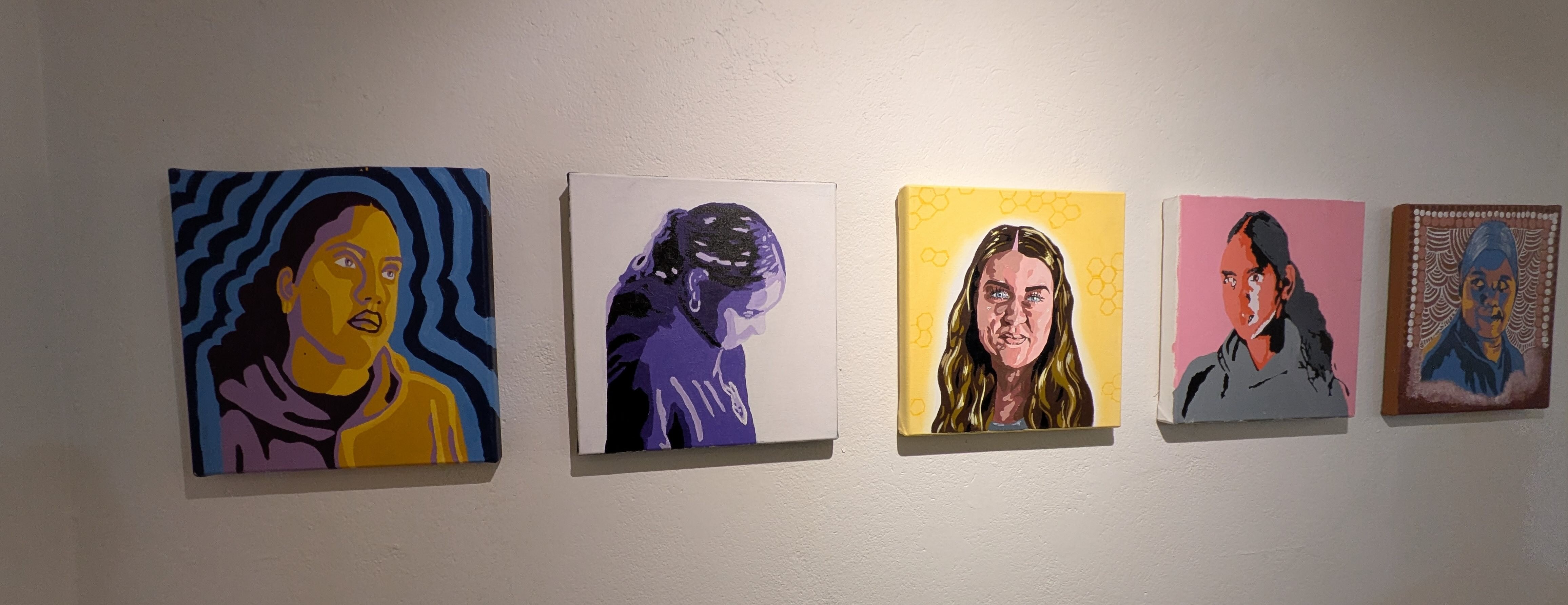
Since March, they have planned the exhibition from the ground up. They worked with a preschool and primary schools where they ran workshops, sent small canvases to over 60 students across the region and invited them to share what culture means to them. They catalogued the artists by skin name, first name and last name. Many of the young primary aged artists are showing in a professional gallery for the first time. The curators also made self-portraits and screen-printed shirts, with the paintings available for sale to the public.
This is the next step in a pathway that began in 2024 with the Artists of the Next Generation exhibition at the same gallery. Visual Arts Lecturer Georgie Anne recruited the current group by working with the schools and giving talks to art students. She hopes to grow the program to at least 12 students next year.
“These students planned this exhibition from the ground up. They designed the look of the show, invited young artists from across the Central Desert to share their stories, and have now seen that work hang in a professional gallery. That is real industry practice, and it is theirs.”, said Georgie Anne praising the students' efforts to carry it from idea to opening.
Desart co-curator Aspen Beattie spent time with the students early in the process, walking them through how Desert Mob works with art centres and how to shape an exhibition. Aspen, who started at Desart straight out of school, said a program like this would have made a difference when she was younger. “I didn’t even know what a curator was when I was in school. It was something I learned about right after. This opportunity gives them a bit of exposure to the bigger picture.”
Desart CEO Philip Watkins said the work sits where it is needed. “We’re creating a space for young people to learn these skills and do these things because this is what’s missing in our community. Often, we have to go away to get these skills and experience, but to be able to grow our own mob up in community here, this is the next generation of curators, and they’re coming from our community.”
Student curator Imani Kani said the course had taken them through the practical work of putting on a show. “Through this course we have learnt how to plan an exhibition top to bottom, like how to make a canvas, creating logos and merchandise. With this experience we have started our art journey and hopefully everyone continues with this path.”
Ruby Williams wanted people to look past the surface of the paintings. “I want the whole audience to think and see the meaning of the story in the background. To unlock new skills to learn more about painting. That is why I enrolled to be here in this course, to understand more and gain my confidence.”
Batchelor Institute delivers VET in Schools on Country and in regional centres across the Northern Territory, grounding training in Both Ways learning so students can build skills without leaving culture and community behind.