

Batchelor Institute logo
Acknowledgement of country

Batchelor Institute would like to acknowledge and pay respect to the Aboriginal and Torres Strait Islander sovereign people of the lands on which our campuses are located. As we share our knowledge, teaching and learning and engage in research practices within this Institution and/or conduct business with a variety of external agencies and organisations, we must always pay respect to the sovereign status of our hosts. May their Ancestors always be remembered and honoured, their Elders listened to and respected, all members treated with dignity and fairness — in the present and well into the future.

We also acknowledge and pay respect to the knowledge embedded forever with our hosts, custodianship of country and the binding relationship they have with the land. Batchelor Institute extends this acknowledgment and expression of respect to all sovereign custodians — past, present and emerging. By expressing Acknowledgement of Country we encourage all to extend and practice respect to all First Nations people wherever their lands are located.

Please read this important information
It is a condition of use of the Batchelor Institute of Indigenous Tertiary Education website that users ensure that any disclosure of the information contained in the website is consistent with the views and sensitivities of the Aboriginal and Torres Strait Islander peoples.
This includes:
Language
Users are warned that there may be words and descriptions which may be culturally sensitive and which might not normally be used in certain public or community contexts. Terms and annotations, which reflect the author’s attitude or that of the period in which the item was written, may be considered inappropriate today in some circumstances.
Deceased persons
Users of the website should be aware that, in some Aboriginal and Torres Strait Islander Communities, seeing images of deceased persons in photographs, film and books or hearing them in recordings may cause sadness or distress and in some cases, offend against strongly held cultural prohibitions.
Access conditions
Materials included in this website may be subject to access conditions imposed by Indigenous communities and/or depositors. Users are advised that access to some materials may be subject to these terms and conditions which the Institute is required to maintain
Application details
Position No.

.pdf, .doc, .docx maxiumum file size 8mb

Thank you for your application

Our Batchelor Institute team will get back to you shortly.

Inter-Library loan form
4 characters left

Item

Single article/chapter

Declaration

  • • I hereby request you to make and supply me with a copy of the article or extract listed on this application, which I require for the purpose of research or study.
  • • I have not previously been supplied with a copy of the said article or extract by a librarian.
  • • I have undertaken that if a copy is supplied to me, I will not use it except for the purposes of research or study.
  • • I have read and understood the above statement.
Thank you for your application

Our Batchelor Institute team will get back to you shortly.

Send your enquiry and a Batchelor team member will get back to you shortly
Thank you for contacting us

Our Batchelor Institute team will get back to you shortly.

Search
Celebrating Language Learning and Revitalisation on Campus
3 minute read

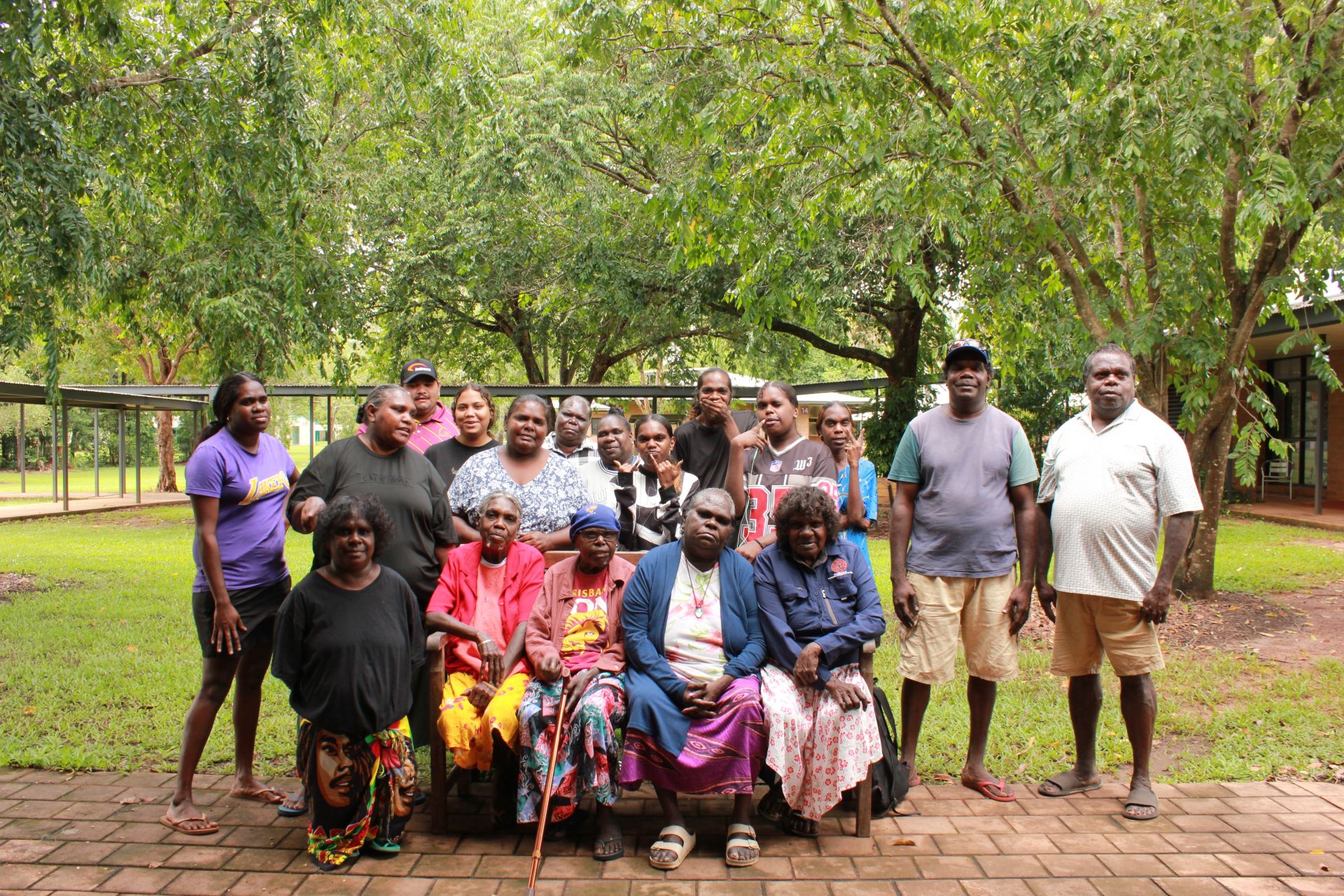
Batchelor Institute’s Top End First Nations Languages team welcomed cohorts from the Belyuen and Numbulwar communities to Batchelor Campus to begin delivery of the Certificate III in Learning an Australian First Nations Language.

Students from Belyuen are studying Batjamalh, Emmi and Mendhe languages. Wadjiginy country extends from Point Blaze at the southern end of Fog Bay to the mouth of the Daly River. Batjamalh is now spoken by only a few Elders, mostly residing at Balgal. The neighbouring Emmiyangal and Mendheyangal countries are located along the coastal strip south of the Daly River mouth, from the Cliff Head region towards Red Cliff, and are largely associated with Mabulhuk.

At the same time, Batchelor’s Centre for Australian Languages and Linguistics (CALL) is working in collaboration with Numburindi Development Aboriginal Corporation (NDAC) to support deliverables under the NDAC language project, Numburindi Upskilling to Preserve our Language. The project is managed and driven by Nunggubuyu in Numbulwar as part of their ongoing efforts to revitalise Wubuy language.

Wubuy is spoken fluently by a small number of families in Numbulwar who are committed to seeing younger generations speak the language confidently and fluently, and to strengthening its distinction from Kriol spoken in the region.

Key outcomes of the project include upskilling local staff in language work through completion of the Certificate III in Learning an Australian First Nations Language (Wubuy), creating a pathway to the Certificate IV in Teaching an Australian First Nations Language, and developing a dictionary by semantic domain book focused primarily on plants and animals.

The two-week delivery concluded with students presenting their languages to Batchelor Institute’s Higher Education, Research and Language Division (HERLD), marking International Mother Language Day with a celebration of learning, language and cultural continuity.