

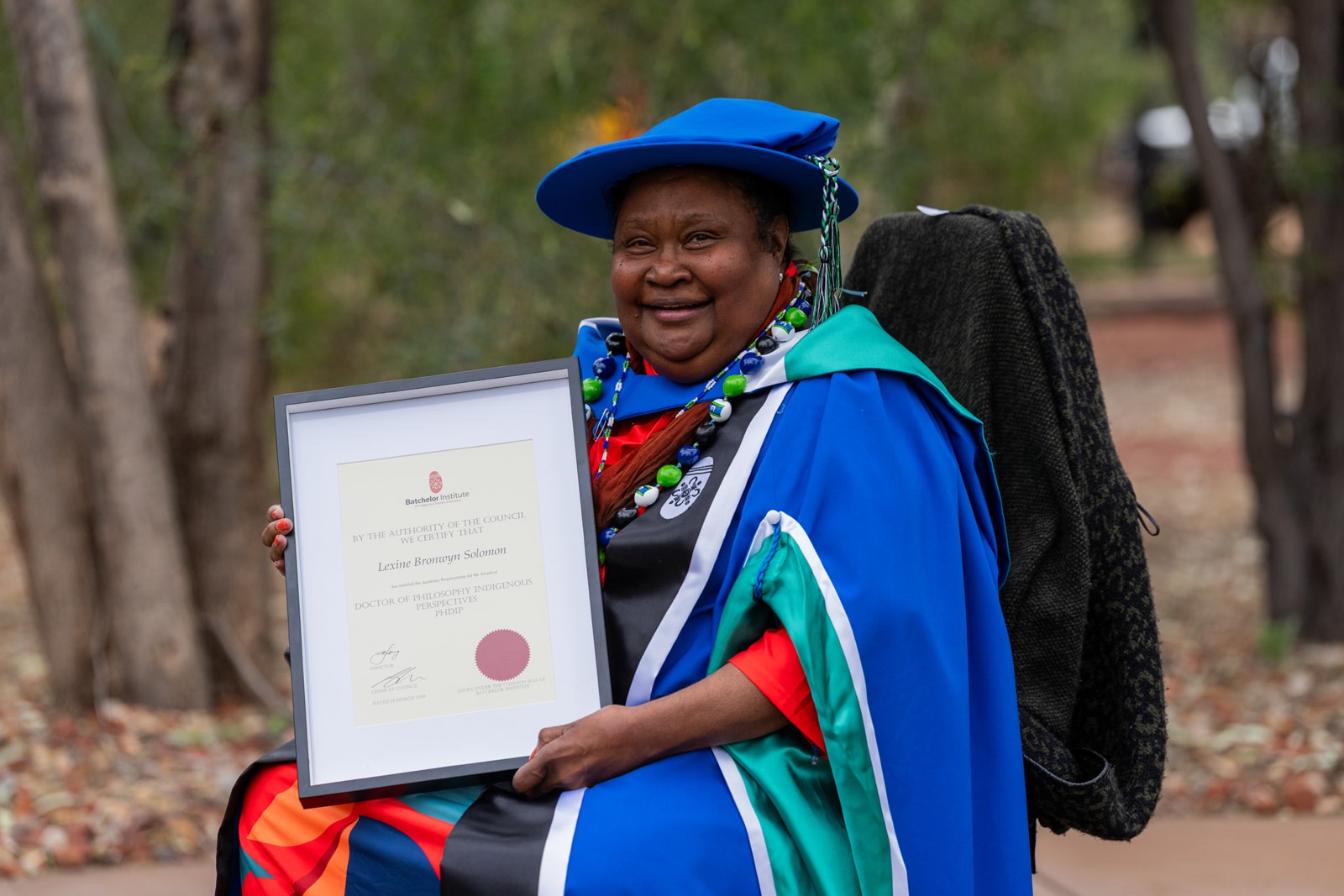
Keep going. You are the Difference: Dr Lexine Solomon conferred a PhD
Keep going. You are the Difference. Those were the words Torres Strait Islander singer, songwriter and researcher Dr Lexine Solomon left with her fellow graduates when she was conferred Doctor of Philosophy in Indigenous Perspectives at the Desert Peoples Centre on Arrernte Country in Mparntwe (Alice Springs) on 10 September 2026.
She stood as artist, researcher and eldest sister. Her doctorate is the public mark of a much older piece of work: songs written so her brothers and sisters would still have a story to hold.
A story that began with family
Dr Solomon grew up in North Queensland, the eldest of 7 children. When their parents passed away in the 1980s, she told the ceremony, it felt as though part of the family’s story went with them. Knowledge, belonging, the things a parent says that you only understand later.
As they grew older, the questions started. Where do we come from? What did Mum mean when she said this? What did Dad mean when he said that? Where do we belong?
In 2002, she answered some of those questions the only way she knew how. She wrote and recorded her first album, This is Woman, so her siblings could hear something of their history, culture and identity.
“At the time, I didn’t know where that journey would take me,” she said. “I certainly didn’t imagine that one day I would be standing here as a Doctor of Philosophy.”
Her music research began in 2004. For more than 30 years she has sung, written and performed, in Australia and overseas. Along the way, performance became a way of remembering, of asking, of keeping people close. That path brought her to Batchelor Institute, studying on the Batchelor Campus and at the Desert Peoples Centre in Mparntwe (Alice Springs). She is the last graduate of the Doctor of Philosophy in Indigenous Perspectives, which the Institute ceased offering from 2020.
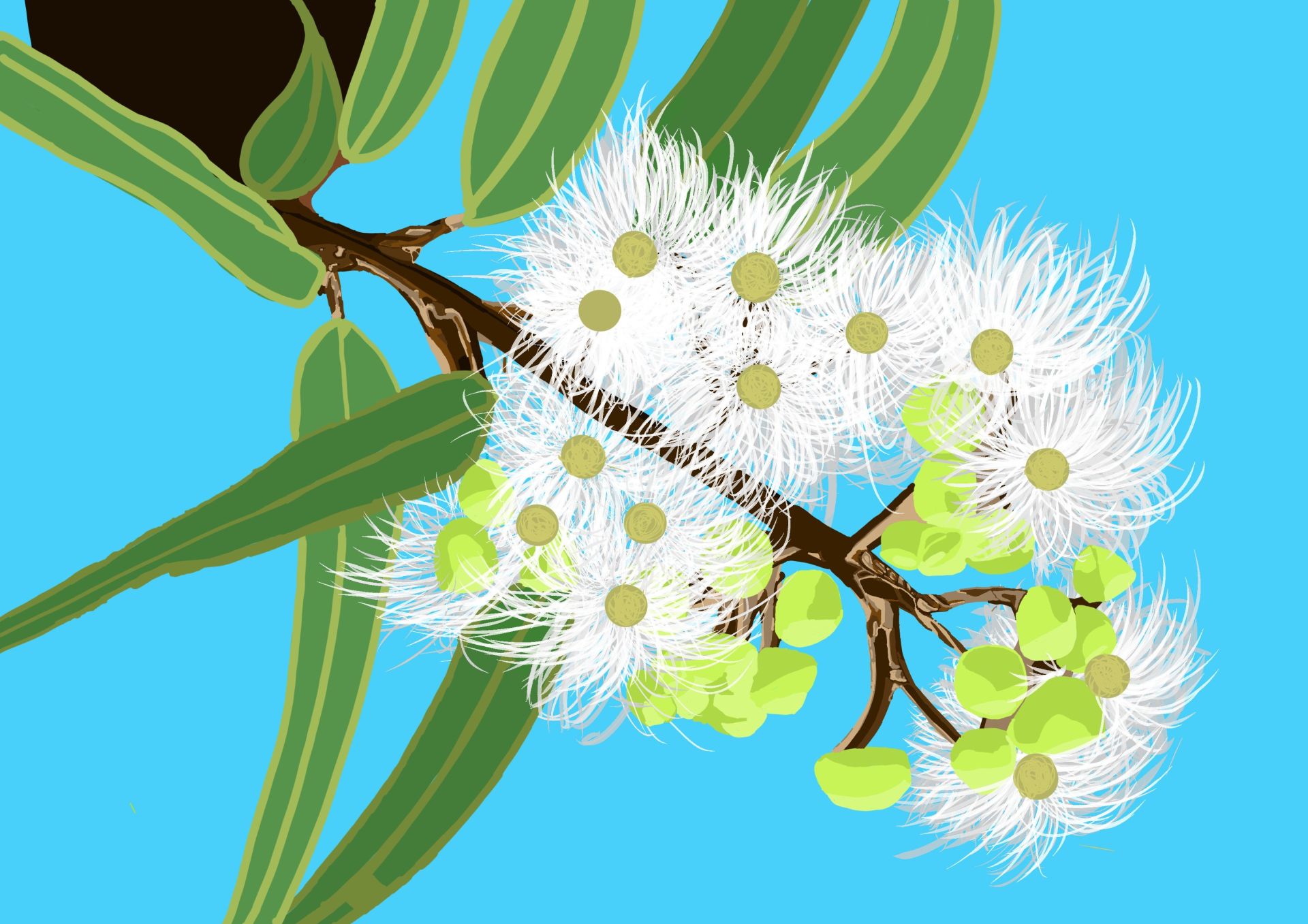
‘Nough for Zura’
Her doctoral thesis, ‘Nough for Zura’: Cooking, Singing, Believing Matriarchal Narratives and the Making of Melanesian Identity Through Musical Exposition, gathers the pieces she has been carrying for years, family, cooking, song, belief and the women whose knowledge made a way for her.
“For me, completing a PhD was never simply about receiving a qualification,” she said. “It was about making space for stories that deserve to be heard. That are waiting to be heard. It was about recognising the knowledge carried by women.”
Culture, she told the graduation room, does not sit in the past. It lives. It moves through families and voices, through songs and food, through memory and the stories people choose to pass on.
She now has three albums: This is Woman, Strike a Pose, and from this research, ‘Nough for Zura’. Each one is a chapter of the same life. She has stood on stages here and overseas. One of the greatest performances of her life, she said, has been learning how to listen. To family. To ancestors. To community. To herself.
The courage to keep going
The road was not straight. During the doctorate she became critically unwell in May 2024 and again in November 2025. For a time, she said, everything she had been working towards seemed small beside the chance to live.
She is here. That is not a small thing. The illness changed how she sees life, resilience and purpose. It reminded her that the journey is not always about how strong we are. Sometimes it is about having the courage to keep going when life takes us somewhere we never expected.
“Today, standing here as I complete my doctorate, I don't take this moment for granted,” she said. “This achievement represents far more than a qualification. It represents perseverance, faith, the people who stood beside me and the grace to keep moving forward when the road became incredibly difficult.”
“If there is one thing I hope others take from my story, it is this. Never underestimate what is possible simply because of what you are facing today. Sometimes surviving the hardest chapter is what prepares you to step into your greatest one.”
Both Ways, and what comes after the degree
Batchelor Institute is Australia’s only Indigenous dual-sector tertiary education provider. Through Both Ways learning, Aboriginal and Torres Strait Islander knowledges stand equal with Western education. Dr Solomon’s doctorate sits in that tradition. The research tools serve the knowledge, the song and the women. Not the other way around.
To her fellow graduates she said the real work begins after the gowns come off. A degree gives knowledge. What we do with it is what gives it meaning. None of us arrive alone.
“Belonging is not only about where we come from,” she said. “It is also about what we carry forward. It is about what we remember. It is about what we protect and it’s about what we leave for those who come after us.”
She thanked those who walked beside her, Almighty God, and the graduating class of 2026. Then she left them with the words she wanted them to take home; Keep going. You are the Difference. Big Esso. ‘Nough for Zura’.
Congratulations Dr Lexine Solomon! Thank you for the songs, the research and the honesty of that speech. You have given others a picture of what is possible when the work is done with love, skill and purpose.
Higher degrees at Batchelor Institute
Batchelor Institute offers higher degree research, including Doctor of Philosophy and Masters pathways. Enquire through the Graduate School to find out more.
Batchelor Institute of Indigenous Tertiary Education: RTO 0383 · TEQSA PRV12068
The Institute acknowledges the Arrernte people as the Traditional Custodians of Mparntwe, where the Desert Peoples Centre stands, and all Custodians of the Countries on which we live, learn and work.