
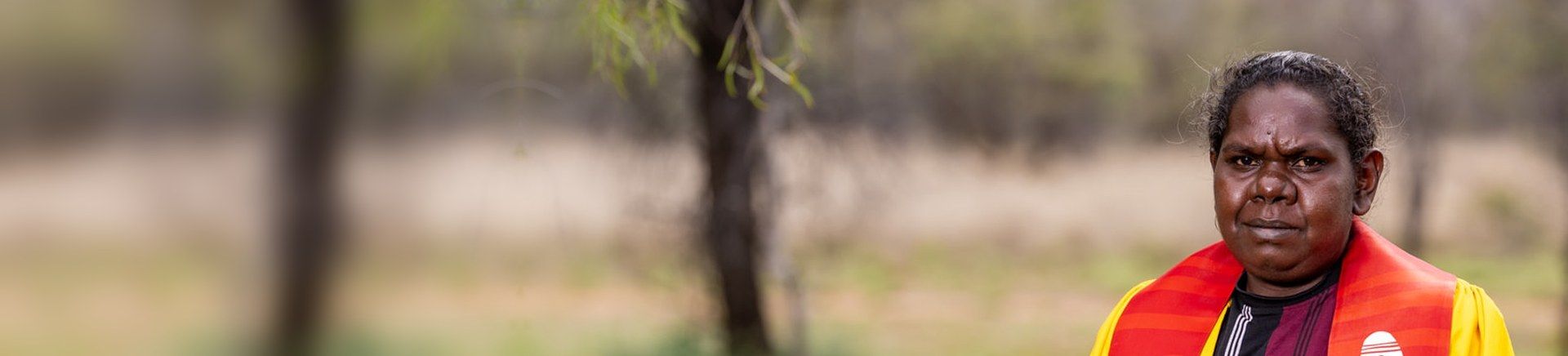

Jonica Dhurrkay: Community leader and Galiwin’ku educator graduates in Early Childhood Education and Care
Learning on Country, graduating for community
On 10 September 2026, at the Desert Peoples Centre Graduation Ceremony on Arrernte Country in Mparntwe (Alice Springs), Jonica Dhurrkay graduated with a Certificate III in Early Childhood Education and Care.
Jonica is a Yolŋu educator from Galiwin’ku, on Elcho Island. She studied while working with young children and families in her community. She said the qualification was a way to build skills to support children’s learning, development and wellbeing, and to do that work in a way that respects culture, families and each child.
“I chose Certificate III in Early Childhood Education and Care because I wanted to build the skills and knowledge to support young children’s learning, development and wellbeing.”
“I enjoy working with children, creating a safe and welcoming environment, and helping them grow with confidence while respecting their culture, families and individual needs.”
A milestone, not a finish line
For Jonica, graduating was the mark of hard work and of not giving up. It was also the point at which she felt ready to use what she had learned.
“Graduating means reaching a milestone after working hard and not giving up. It represents growth, perseverance and achieving something I’m proud of.”
“It also means I’m ready to use what I’ve learned to make a positive difference in the lives of children and my community.”
She will keep working in Galiwin’ku, supporting children and community, and she wants to keep studying so she can grow as an educator.
Language, kinship and a safe place to learn
Graduating has already changed Jonica’s day-to-day work. She said it has given her more confidence, a stronger understanding of child development and clearer ways to communicate respectfully with families. The learning environment she is building in Galiwin’ku is safe, welcoming and culturally responsive.
Culture is not an add-on in that work. Jonica brings Yolŋu Matha, kinship and cultural knowledge into everyday activities through language, stories and songs. She teaches children about respect, relationships, and responsibilities to family, community and Country. She works with families and knowledge holders so children can see their identity reflected where they learn.
“This helps children feel safe, proud, connected and respected.”
That is Both Ways learning in practice. Aboriginal and Torres Strait Islander knowledges stand with the skills of a nationally recognised early childhood qualification. The educator, the family and the knowledge holders stay at the centre.
A word for the next student
Asked what she would say to other Yolŋu women thinking about study, Jonica did not hesitate.
“I’d say, go for it. Don’t be afraid to start, even if it feels hard. Batchelor Institute understands our culture and supports Yolŋu students.”
“Believe in yourself, ask for help when you need it, and keep going. Your education can open doors for you, your family, and your community.”
Batchelor Institute is Australia’s only Indigenous dual-sector tertiary education provider. The Certificate III in Early Childhood Education and Care is delivered through workshops on campus and in community, with workplace learning in a regulated early childhood service. It prepares graduates for work as early childhood educators in long day care, family day care, preschool and kindergarten settings, including in remote communities.
Congratulations, Jonica. Your words from Galiwin’ku give other students a clear picture of what is possible when study stays connected to children, culture and Country.
Study Early Childhood Education and Care
If you are ready to support young children and families, Batchelor Institute offers the CHC30125 Certificate III in Early Childhood Education and Care. Graduates can continue into the CHC50125 Diploma of Early Childhood Education and Care. Workshops run at Batchelor Campus and the Desert Peoples Centre, with workplace learning in an early childhood service.
Visit Future Students or call 1800 677 095.
The Institute acknowledges the Arrernte people as the Traditional Custodians of Mparntwe, where the Desert Peoples Centre stands, and the Yolŋu people of Galiwin’ku, Elcho Island. We pay our respects to Elders past and present.